Showing posts with label German. Show all posts

Wednesday, 22 April 2015

Broken Linseed, breakfast and etymology

I enjoy a bit of broken linseed on my muesli of a morning.

This morning I idly looked over the packet of linseed and thanks to the handy way packaging (and road signs) in Brussels often has instant translations into French and Dutch I was able to see that in Dutch it's gebroken lijnzaad.

No big secrets here I think. In fact here we can see the proof that English is a Germanic language and the etymology of both backs this up (Old English: līn sǣd. Interestingly it seems that this time, it's the Dutch which has deviated more from the old root word as PIE for flax is also līn).

But that's not what caught my eye. What caught my eye was the absence of 'ge-' in the English version. I knew that English, as a Germanic language, also used 'ge-' as a prefix to indicate a completed action but why doesn't it anymore? After all, it has a PIE root in 'ga-'.

It seems laziness may have played a part....

On further reading I find that the 'ge-' prefix in English was pronounced 'y-'. Sounds weird but you hear a difference between German with a hard 'ge-' sound, and in Dutch a softer 'ge-' prefix and further in the Dutch spoken in Flanders, it's even softer. Why not shift it softer still in Old English?

And we can imagine why this very soft 'y-' sound easily faded out. Try it! It's a pain to say... ymarried, yfallen, yknow....! So, ever the pragmatist, the English language simply let this appendage shrivel up and drop off.

But not altogether. It remains alive in words such as handiwork (y- seems to have [eventuallly] been pronounced -i-) (Handiwork comes from hand + gewoerc.

And all that from ybroken linseed!


Monday, 2 March 2015

Es ist ein Kind

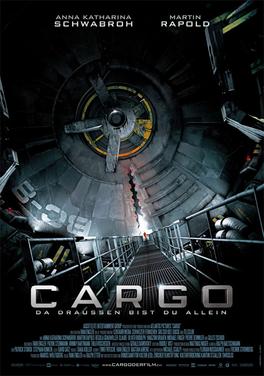
I watched a neat Sci-Fi film last night called Cargo. It's a German film and was just what I needed: not too deep, a bit hackneyed but overall well-made.

As it was in German I had to use subtitles (in French on this occasion given the constraints of Netflix!) and I was struck at one point by the proclamation by a protagonist of, "Es ist ein Kind!". What I thought of immediately of course was the similarity with Dutch: "Het is een kind".

I was initially tempted to read a link with English when you think that sometimes for 'k' in Dutch (or German) we can read with a 'ch' in English.

You can see this in words like cheese or church (Käse, Kaas / kerk, kirche) so I thought I saw a similar link with child->kind.

But no! Upon further investigation we see that child comes from the Proto-Germanic root of *kiltham meaning newly born, foetus or infant (also cognate with the Danish kuld meaning 'litter' or 'brood').

So what of 'kind' (as child) and its relation to children in English? Well, it seems we do retain some feel of this in English through kin (related to the family) or indeed kind (as in a sort or type of things). These stem from the Old English 'cynde' which originally meant the natural order of things and from which by extension we can see a link both with children and kin and 'a sort, type of something'.

Es ist ein Kind
Het is een kind
It is a child.

Unsurprisingly 'it' is very closely related to 'het' in Dutch. In fact in Old Frisian it was 'hit'. Etymonline.com points out the h in Old English was dropped due to it being in an unemphasised position.