
Showing posts with label Dutch. Show all posts
Showing posts with label Dutch. Show all posts
Monday, 4 May 2015

Wednesday, 22 April 2015
Broken Linseed, breakfast and etymology
 I enjoy a bit of broken linseed on my muesli of a morning.
This morning I idly looked over the packet of linseed and thanks to the handy way packaging (and road signs) in Brussels often has instant translations into French and Dutch I was able to see that in Dutch it's gebroken lijnzaad.
No big secrets here I think. In fact here we can see the proof that English is a Germanic language and the etymology of both backs this up (Old English: līn sǣd. Interestingly it seems that this time, it's the Dutch which has deviated more from the old root word as PIE for flax is also līn).
But that's not what caught my eye. What caught my eye was the absence of 'ge-' in the English version. I knew that English, as a Germanic language, also used 'ge-' as a prefix to indicate a completed action but why doesn't it anymore? After all, it has a PIE root in 'ga-'.
It seems laziness may have played a part....
On further reading I find that the 'ge-' prefix in English was pronounced 'y-'. Sounds weird but you hear a difference between German with a hard 'ge-' sound, and in Dutch a softer 'ge-' prefix and further in the Dutch spoken in Flanders, it's even softer. Why not shift it softer still in Old English?
And we can imagine why this very soft 'y-' sound easily faded out. Try it! It's a pain to say... ymarried, yfallen, yknow....! So, ever the pragmatist, the English language simply let this appendage shrivel up and drop off.
But not altogether. It remains alive in words such as handiwork (y- seems to have [eventuallly] been pronounced -i-) (Handiwork comes from hand + gewoerc.
And all that from ybroken linseed!
Monday, 2 March 2015
Es ist ein Kind
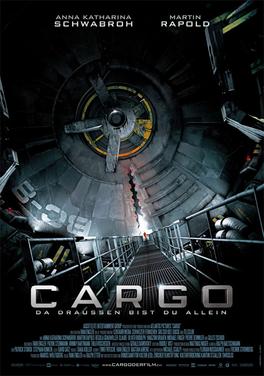
I watched a neat Sci-Fi film last night called Cargo. It's a German film and was just what I needed: not too deep, a bit hackneyed but overall well-made.
 As it was in German I had to use subtitles (in French on this occasion given the constraints of Netflix!) and I was struck at one point by the proclamation by a protagonist of, "Es ist ein Kind!". What I thought of immediately of course was the similarity with Dutch: "Het is een kind".
I was initially tempted to read a link with English when you think that sometimes for 'k' in Dutch (or German) we can read with a 'ch' in English.
You can see this in words like cheese or church (Käse, Kaas / kerk, kirche) so I thought I saw a similar link with child->kind.
But no! Upon further investigation we see that child comes from the Proto-Germanic root of *kiltham meaning newly born, foetus or infant (also cognate with the Danish kuld meaning 'litter' or 'brood').
So what of 'kind' (as child) and its relation to children in English? Well, it seems we do retain some feel of this in English through kin (related to the family) or indeed kind (as in a sort or type of things). These stem from the Old English 'cynde' which originally meant the natural order of things and from which by extension we can see a link both with children and kin and 'a sort, type of something'.
Es ist ein Kind
Het is een kind
It is a child.
Unsurprisingly 'it' is very closely related to 'het' in Dutch. In fact in Old Frisian it was 'hit'. Etymonline.com points out the h in Old English was dropped due to it being in an unemphasised position.
I was initially tempted to read a link with English when you think that sometimes for 'k' in Dutch (or German) we can read with a 'ch' in English.
You can see this in words like cheese or church (Käse, Kaas / kerk, kirche) so I thought I saw a similar link with child->kind.
But no! Upon further investigation we see that child comes from the Proto-Germanic root of *kiltham meaning newly born, foetus or infant (also cognate with the Danish kuld meaning 'litter' or 'brood').
So what of 'kind' (as child) and its relation to children in English? Well, it seems we do retain some feel of this in English through kin (related to the family) or indeed kind (as in a sort or type of things). These stem from the Old English 'cynde' which originally meant the natural order of things and from which by extension we can see a link both with children and kin and 'a sort, type of something'.
Es ist ein Kind
Het is een kind
It is a child.
Unsurprisingly 'it' is very closely related to 'het' in Dutch. In fact in Old Frisian it was 'hit'. Etymonline.com points out the h in Old English was dropped due to it being in an unemphasised position.
Monday, 2 February 2015
Woord van de dag : eenvoudig
I've had today's word of the day rolling and lolling around my head for some time. It just seems so pleasant to say! Unfortunately it's not as simple to say as its meaning….
Eenvoudig (niet ingewikkeld)
means simple, straightforward (not complicated).
And if you are learning Dutch then here's a place you can go for 'eenvoudig Nederlands', taalblad.be
"TAALBLAD.BE is een e-zine met dagelijkse actualiteit, geschreven in het Nederlands, maar voor anderstaligen (that's me)".
Can't quite work out from the etymology if this word is made up of een (one), voud (fold) ig (y). Any ideas, please comment!
Eenvoudig (niet ingewikkeld)
means simple, straightforward (not complicated).
And if you are learning Dutch then here's a place you can go for 'eenvoudig Nederlands', taalblad.be
"TAALBLAD.BE is een e-zine met dagelijkse actualiteit, geschreven in het Nederlands, maar voor anderstaligen (that's me)".
Can't quite work out from the etymology if this word is made up of een (one), voud (fold) ig (y). Any ideas, please comment!
Friday, 12 September 2014
Monday, 14 July 2014
Dutch online learning resource
Found a neat online language learning resource called Linguistadores which helps you study a language through news articles, videos and music. Its online quick reference dictionary and user defined flashcard system are very cool.
Currently it seems free and I can see very few drawbacks (if any!).
The company says this about itself' "We've built a platform which helps people achieve their ambitions by mastering a language in a way that is satisfying, relevant today, and customized to who they are today and who they want to be. Our technology and technological roadmap is focused on sewing the language learning process into the routines, activities, and pursuits of daily life in the form of genuine foreign language content (articles, music, and videos)."
Currently you can learn Dutch, English or Spanish
Currently it seems free and I can see very few drawbacks (if any!).
The company says this about itself' "We've built a platform which helps people achieve their ambitions by mastering a language in a way that is satisfying, relevant today, and customized to who they are today and who they want to be. Our technology and technological roadmap is focused on sewing the language learning process into the routines, activities, and pursuits of daily life in the form of genuine foreign language content (articles, music, and videos)."
Currently you can learn Dutch, English or Spanish
Thursday, 19 June 2014
Tuesday, 20 May 2014
Dutch Word of the Day
Dutch Word of the Day is a useful look at everyday Dutch expressions with examples and context.
Check it out!

Check it out!
Thursday, 6 March 2014
File attached…. "ingesloten" of "in bijlage" :
Sometimes you don't really learn some of the most important words in classic language lessons. I'm not saying language lessons aren't useful: far from it! It's just some essential terms slip under the net. Very often these are expressions or sayings that you just don't learn, you pick up.
For example 'attached'. This, in the sense of 'please find the document attached (to an email)'. And here the problem starts. You don't know what attached is, so you look it up in a dictionary which just says something like, 'aangesloten' (more like connected), so you use it! Unfortunately it seems that this is not the correct word to use.
Fortunately for me, my Dutch speaking friends are cool and have informed me that:
"ingesloten" of "in bijlage" is the norm.
Keep making mistakes everybody! But always be ready to accept corrections. It's the only way to improve.
For example 'attached'. This, in the sense of 'please find the document attached (to an email)'. And here the problem starts. You don't know what attached is, so you look it up in a dictionary which just says something like, 'aangesloten' (more like connected), so you use it! Unfortunately it seems that this is not the correct word to use.
Fortunately for me, my Dutch speaking friends are cool and have informed me that:
"ingesloten" of "in bijlage" is the norm.
Keep making mistakes everybody! But always be ready to accept corrections. It's the only way to improve.
Wednesday, 11 September 2013
Basic Dutch Phrases
By gum you could cut that Dutch accent with a knife, but it's a nice introduction video to some basic phrases used in the Netherlands and Belgium.
Monday, 2 September 2013
To bowl a maiden over > Mijden?
Whilst playing cricket yesterday I spent some time scoring our first innings and chatting with one of the Flemish players. We mulled a little over the term 'Maiden' (a scoreless over) and I offered that the etymology is more to do with the older sense of being 'unproductive'. I quizzed him if there was a similar word in Dutch and he came up with the possibility of 'mijden' which means to avoid.
The etymology of maiden shows simply a root meaning of 'unmarried' but I can't link it to mijden whose etymology is more associated with the Anglo-Saxon 'mīðan', which also meant to avoid.
It seems my fancy research was all for nothing. It was unproductive: a maiden! I looked back into the etymology to find German, 'mädchen', Dutch 'meid/magd' and English 'maiden' (ongehuwde, unmarried, unproductive…) to be most likely to have given the word to the cricket over.
The etymology of maiden shows simply a root meaning of 'unmarried' but I can't link it to mijden whose etymology is more associated with the Anglo-Saxon 'mīðan', which also meant to avoid.
It seems my fancy research was all for nothing. It was unproductive: a maiden! I looked back into the etymology to find German, 'mädchen', Dutch 'meid/magd' and English 'maiden' (ongehuwde, unmarried, unproductive…) to be most likely to have given the word to the cricket over.
Monday, 22 July 2013
A biography of the Dutch language
 This is definitely a book I'm putting on my Christmas list! A biography of the Dutch language, written in English by Flemish linguist Roland Willemyns. I heard him being interviewed on Dutch language radio een (I think!) but I didn't quite understand the author's name so I was glad when I spotted an article in the English language paper 'Flanders Today'.
The book, printed by Oxford University Press, covers the history of Dutch as well as the influence of Dutch today. For someone like me who is interested (obsessed?) by the etymology of the English language I think it's pretty indispensable. Part of the joy of this blog is spotting links between English and Dutch to help me remember what sometimes seem at first glance super-complex words. And of course as a learner of the Dutch language it'll be fairly interesting to see the development of the language; knowing the history will help me understand the grammar more. I hope.
Of course, I can't say too much about it as I haven't read it yet.
Maybe I'll move this from the Christmas list to my birthday list.
Or maybe I'll just buy it tomorrow….
Wednesday, 1 May 2013
Eggys or Eryen?
William Caxton who is credited as setting up the first printing presses in England also helped edit and translate many works. One story he wrote illustrates some of the difficulties he had with the various English dialects of the time. It is the tale of two merchants who knock upon a door and ask to buy eggs…
"And one of theym named Sheffelde, a mercer, cam in to an hows and axed for mete and specyally he axyd after eggys, and the goode wyf answerde that she could speke no Frenshe. And the marchaunt was angry, for he also coude speke no Frenshe, but wolde have hadde egges; and she understode hym not. And thenne at laste a-nother sayd that he wolde have eyren. Then the good wyf sayd that she understod hym wel. Loo, what sholde a man in thyse dayes now wryte, egges, or eyren? Certaynly it is hard to playse every man, by-cause of dyversite and chaunge of langage." (Ref)
The confusion comes form the fact that 'Sheffield' was using a Northern dialect (influenced by Old Norse) which gave the word 'eggys'. Eryen which is very similar to modern Dutch 'eieren' was in fact influenced by the Southern Old English dialect. Interestingly Caxton decided to furthermore use the word 'egges'. (Ref p.87 The Story of English, Piercy, London 2012).
Monday, 1 April 2013
Wednesday, 27 March 2013
English is second spoken language in Brussels
The following article from Flanders Today highlighted something that I have suspected for a long time: English is everywhere in Brussels. Maybe not EVERYWHERE, but I do know some non-Belgians who live here without knowing any French or Dutch (or German which is the third official language in Belgium).
In fact the figures used in the article show French spoken by 88% of respondents, English by nearly 30% and Dutch by 23%.
The results from the VUB team (note their website is only available in Dutch and English) which carried out the inquiry show also that Dutch knowledge is increasing. Something to which I, as a resident of Brussels and a Dutch language student, can attest. I hear Dutch a lot more in the streets and trams than when I first lived here nearly 20 years ago and I find the Dutch language education in Brussels extensive. There are lots of opportunities to learn Dutch and get better at it: not only subsidised Dutch lessons but Dutch language local libraries (such as Kontakt) and conversation tables organised in Dutch.
The sad truth of it though is that these initiatives need to be in place (regardless of any political motivation) because Flemings simply don't like speaking Dutch to non-native Dutch speakers. One Fleming conceded that this was because they didn't want to give the 'power' of the conversation away; that they prefer to understand everything and keep the 'advantage'. Another Fleming friend maintains that he speaks English rather than Dutch (to me!) because Flemish people like to help others, which I can well understand but it doesn't help me learn Dutch!
I was at a dinner party with Flemings and said, in Dutch, "It's a struggle to speak Dutch here in Brussels as Flemings speak to me in English", to which the guy, completely unfazed, replied in English…
It's a good job I'm tenacious! I still try to speak Dutch in shops and in street encounters but my goal of being fluent in Dutch within a year came and went. I am conversant with a strong intermediate level but this is thanks mainly to my own hard work and lessons rather than encounters with native Dutch speakers.
In fact the figures used in the article show French spoken by 88% of respondents, English by nearly 30% and Dutch by 23%.
The results from the VUB team (note their website is only available in Dutch and English) which carried out the inquiry show also that Dutch knowledge is increasing. Something to which I, as a resident of Brussels and a Dutch language student, can attest. I hear Dutch a lot more in the streets and trams than when I first lived here nearly 20 years ago and I find the Dutch language education in Brussels extensive. There are lots of opportunities to learn Dutch and get better at it: not only subsidised Dutch lessons but Dutch language local libraries (such as Kontakt) and conversation tables organised in Dutch.
The sad truth of it though is that these initiatives need to be in place (regardless of any political motivation) because Flemings simply don't like speaking Dutch to non-native Dutch speakers. One Fleming conceded that this was because they didn't want to give the 'power' of the conversation away; that they prefer to understand everything and keep the 'advantage'. Another Fleming friend maintains that he speaks English rather than Dutch (to me!) because Flemish people like to help others, which I can well understand but it doesn't help me learn Dutch!
I was at a dinner party with Flemings and said, in Dutch, "It's a struggle to speak Dutch here in Brussels as Flemings speak to me in English", to which the guy, completely unfazed, replied in English…
It's a good job I'm tenacious! I still try to speak Dutch in shops and in street encounters but my goal of being fluent in Dutch within a year came and went. I am conversant with a strong intermediate level but this is thanks mainly to my own hard work and lessons rather than encounters with native Dutch speakers.
Wednesday, 6 February 2013
Aethelred the Ill-Advised
With the discovery of King Richard III's remains recently I've been thinking of Britain's monarchs. An interesting and bizarrely named AEthelred the Unready springs to mind and makes me dip into some etymology. His name in Old English was in fact 'Æþelræd Unræd' which meant AEthelraed 'Bad Counsel' (or Ill advised). Nothing to do with being unready, simply a mis-translation of 'Unræd' (potentially used by biographers to their own end).
"Unræd", thinks I. "Hmmm….link to Dutch?"
Of course!
Counsel (or an advisory position) is 'raad' in Dutch (synoniemen: advies, advocaat, counsel).
Etymology for 'raad': [advies, adviserend college] {oudnederlands rat 901-1000, middelnederlands raet [advies, adviserend lichaam]} van raden.
Synonymous with German, 'rat', cf Rathaus (town hall).
"Unræd", thinks I. "Hmmm….link to Dutch?"
Of course!
Counsel (or an advisory position) is 'raad' in Dutch (synoniemen: advies, advocaat, counsel).
Etymology for 'raad': [advies, adviserend college] {oudnederlands rat 901-1000, middelnederlands raet [advies, adviserend lichaam]} van raden.
Synonymous with German, 'rat', cf Rathaus (town hall).
Monday, 28 January 2013
Fyra explained
…in Dutch:
http://www.taalblad.be/e-zine/focus/fyra-flitstrein-wordt-floptrein/1017.html
Niet zo lang geleden was het zeer eenvoudig om met de trein van Brussel naar Amsterdam te reizen. Je stapte op de IC-trein (intercitytrein) in Brussel en een kleine drie uur later was je in Amsterdam.
…in English:
"The Dutch and Belgian governments last week stopped the service of the new high-speed Fyra train linking Brussels and Amsterdam, which has been plagued with problems since its launch last month. "
http://www.flanderstoday.eu/content/fyra-problems-see-service-withdrawn
http://www.taalblad.be/e-zine/focus/fyra-flitstrein-wordt-floptrein/1017.html
Niet zo lang geleden was het zeer eenvoudig om met de trein van Brussel naar Amsterdam te reizen. Je stapte op de IC-trein (intercitytrein) in Brussel en een kleine drie uur later was je in Amsterdam.
…in English:
"The Dutch and Belgian governments last week stopped the service of the new high-speed Fyra train linking Brussels and Amsterdam, which has been plagued with problems since its launch last month. "
http://www.flanderstoday.eu/content/fyra-problems-see-service-withdrawn
Wednesday, 23 January 2013
Belgians divided by language barrier
Language issues in Belgium. Note the reaction by the headmaster, "If they have a problem, they can go elsewhere".
Friday, 7 December 2012
Thursday, 8 November 2012
Keek - Kijken - Peek
Saw this funny sketch which is mostly in Scottish dialect and picked up one word which quite obviously has Dutch connections!
At one point the medical officer says, "Will ye stop keeking at my @rse!" (1:45)
Keek = kijk (from kijken to look)
This website claims it is indeed descended from Middle Dutch:
http://www.britannia.org/scotland/scotsdictionary/k.shtml
At one point the medical officer says, "Will ye stop keeking at my @rse!" (1:45)
Keek = kijk (from kijken to look)
This website claims it is indeed descended from Middle Dutch:
http://www.britannia.org/scotland/scotsdictionary/k.shtml
Subscribe to:
Posts (Atom)